When Ground Transportation Fails Your Event: The Silent Profit Killer Most Planners Never See Coming

Photo: Unknown authorUnknown author, Public domain, via Wikimedia Commons
The keynote speaker is ready. The catering is flawless. The venue is immaculate. Yet forty-three attendees are stranded outside O'Hare International Airport at 9:47 p.m., frantically refreshing rideshare apps in a city experiencing peak surge pricing. By the time they reach the conference hotel, the opening reception has ended, first impressions have soured, and the carefully curated networking opportunity that justified their registration fees has evaporated entirely.
This scenario is not hypothetical. It plays out across major American convention cities—Chicago, Las Vegas, Orlando, Houston, New York—with remarkable regularity, and the financial damage it inflicts on event budgets is far greater than most organizers ever quantify.
The ROI Equation Nobody Is Running
Corporate event planners are meticulous about tracking catering costs per head, audiovisual expenditures, and hotel room block negotiations. Transportation, by contrast, is frequently treated as an afterthought—a line item that attendees are expected to manage independently. This assumption is costing organizations dearly.
Consider the actual math. A mid-sized corporate conference hosting 500 attendees in Las Vegas may generate $1.2 million in direct revenue through registrations, sponsorships, and exhibitor fees. If 15 percent of attendees report a negative ground transportation experience—missed shuttles, surge-priced rides, confusing pickup instructions—and even a fraction of those choose not to return the following year, the downstream revenue impact compounds dramatically. Industry data from the Events Industry Council suggests that repeat attendance accounts for between 35 and 55 percent of registration revenue at established annual conferences. Losing even a portion of that loyalty to logistical frustration represents a genuine financial wound.
Yet the damage rarely appears on any post-event report under a line item labeled "transportation failure." It hides instead inside attendee satisfaction scores, year-over-year registration declines, and sponsor renewal hesitancy—all of which are attributed to vague notions of "declining engagement" rather than the concrete operational breakdown that triggered them.
What Corporate Travel Managers Are Actually Experiencing
Speak with any corporate travel coordinator who manages event logistics at scale, and the frustration is immediate and specific. The problems cluster around three recurring failures: inconsistent communication, fragmented vendor relationships, and the dangerous assumption that major rideshare platforms will absorb unlimited demand without degradation.
Rideshare surge pricing during peak conference arrival windows is a particularly acute problem in cities like Nashville and Austin, where infrastructure has struggled to keep pace with explosive event growth. When 800 conference attendees land within a two-hour window at Nashville International Airport on a Thursday afternoon, the local rideshare ecosystem cannot accommodate that volume at standard rates. Attendees who budgeted $30 for an airport transfer suddenly face $85 to $120 charges—costs that either come out of personal pockets or generate expense report friction with corporate finance departments.
More damaging still is the psychological toll. Arriving at a professional event already stressed, financially stung, and physically exhausted from an unplanned logistical ordeal primes attendees to evaluate everything that follows through a negative lens. The opening session that might have felt energizing instead feels like an inconvenience.
The Coordination Gap: Where Events Lose Control
The fundamental problem is structural. Most event organizers outsource venue selection, catering, audiovisual production, and entertainment to specialized vendors—yet they leave ground transportation entirely to chance, providing attendees with a list of rideshare apps and a hotel address. This creates what logistics professionals refer to as a coordination gap: a critical operational phase with no designated owner, no contingency planning, and no accountability framework.
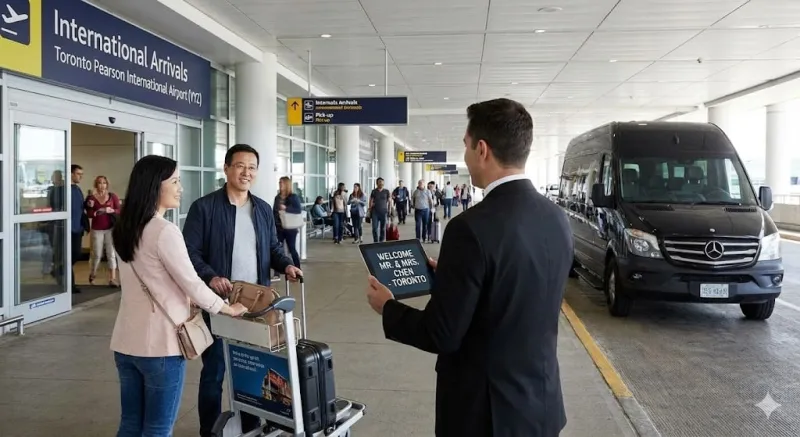
Professional transfer coordination eliminates this gap by establishing centralized ground logistics management before a single attendee books a flight. This means pre-negotiated vehicle fleets appropriate to expected arrival patterns, dedicated pickup zones with clear signage and staff presence, real-time flight tracking to accommodate delays, and unified billing that removes the expense report burden from individual attendees entirely.
For multi-day conferences, the benefits extend well beyond airport arrivals. Shuttle circuits between overflow hotels and the primary venue, transportation to sponsored dinners and offsite activities, and VIP transfer arrangements for keynote speakers and executive attendees all require the same disciplined coordination—and all represent opportunities for the kind of seamless experience that reinforces an event's professional reputation.
Actionable Strategies for Event Organizers
The path toward transportation-related ROI recovery begins well before the event date. Several practical strategies have demonstrated measurable results for organizations willing to treat ground logistics as a core operational priority rather than an attendee amenity.
Conduct a transportation demand audit during registration. Collect flight arrival and departure data proactively. Understanding that 60 percent of your attendees arrive between 2:00 p.m. and 7:00 p.m. on a single day allows you to right-size vehicle capacity and staffing accordingly. This data also enables meaningful conversations with transfer service providers about appropriate fleet composition.
Negotiate dedicated transfer capacity in advance. Relying on open-market rideshare availability during high-demand periods is operationally reckless. Partnering with a professional ground transportation provider to reserve dedicated capacity—with guaranteed pricing locked before surge conditions materialize—protects both attendees and event budgets simultaneously.
Build transportation experience into your attendee communications strategy. Clear, proactive communication about pickup procedures, designated vehicle locations, and estimated travel times reduces the anxiety that compounds logistical friction. An attendee who knows exactly where to go and what to expect arrives in a meaningfully better frame of mind than one who is guessing.
Measure transportation satisfaction explicitly. Post-event surveys that isolate ground transportation as a distinct satisfaction category generate data that is otherwise invisible. Organizations that begin tracking this metric consistently report that it correlates strongly with overall event satisfaction scores—and that improvements in transfer coordination produce measurable gains in attendee-reported value.
The Competitive Advantage of Getting This Right
In a market where corporate events compete aggressively for attendee time, sponsorship dollars, and organizational budgets, the experience delivered from the moment an attendee lands at the airport is no longer a peripheral concern. It is part of the product.
Organizations that have invested in professional transfer coordination consistently report not only higher satisfaction scores but also stronger sponsor relationships—because sponsors understand that a well-run event reflects well on their brand association. The seamless journey from airport to venue to session to dinner and back again signals organizational competence in ways that no keynote speaker, however distinguished, can fully compensate for when the ground logistics have failed.
The last mile of an attendee's journey to your event is the first impression they carry into the room. It deserves the same strategic attention as every other element of the experience you have worked so hard to create.