The Frequent Flyer's Hidden Tax: Why Seasoned Business Travelers Are Finally Walking Away from Patchwork Transportation
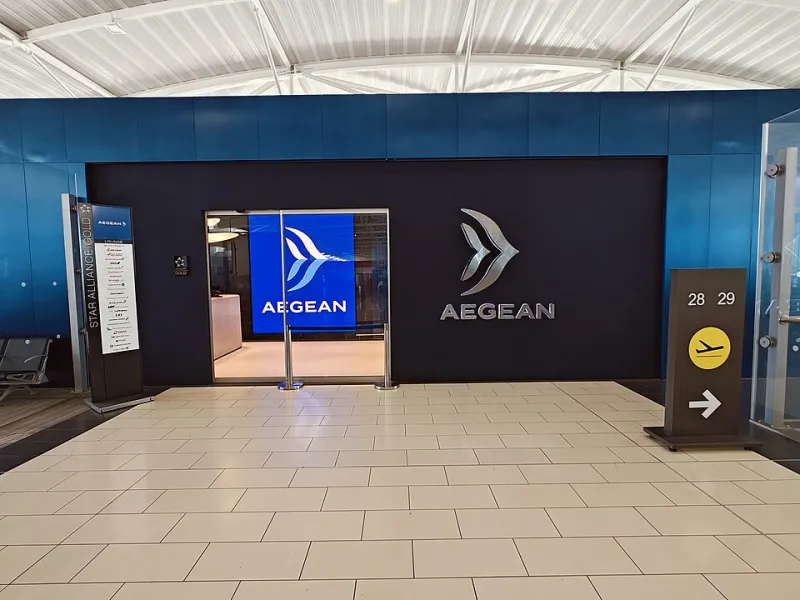
Photo: PerpetualTraveler, CC BY-SA 4.0, via Wikimedia Commons
There is a particular kind of exhaustion familiar to anyone who travels for work more than twice a month. It is not the fatigue of long flights or packed schedules—those are expected, even planned for. It is the cumulative drain of a hundred small frictions: the rideshare that cancels two minutes before pickup, the surge price that doubles an expense report line item, the rental car shuttle that runs every twenty minutes and departs thirty seconds before you arrive. Individually, each incident is minor. Collectively, across dozens of annual trips, they constitute a significant and largely invisible tax on professional productivity and personal wellbeing.
An emerging cohort of American business travelers—particularly those logging 20 or more trips per year—has begun to recognize this tax for what it is and to seek a fundamentally different approach to ground transportation.
The Myth of the Resourceful Road Warrior
American business culture has long celebrated the self-sufficient traveler: the professional who knows every airport terminal layout, holds elite status on three carriers simultaneously, and navigates any city with nothing more than a smartphone and decisive confidence. The ability to cobble together transportation from multiple apps and services has been framed as a competency, even a badge of honor.
This framing obscures a straightforward economic reality. Every minute spent managing a failed rideshare pickup, disputing an unexpected charge, or waiting at a rental counter is a minute not spent on the work that justified the trip in the first place. For a senior consultant billing at $300 per hour, thirty minutes of avoidable transportation friction on each of 25 annual trips represents $3,750 in absorbed productivity loss—before accounting for the cognitive load that travel stress imposes on decision-making quality throughout the day that follows.
The resourceful road warrior is, in many cases, simply a professional absorbing costs that have been rendered invisible by the fragmented nature of the systems generating them.
What Expense Audits Are Actually Revealing
Corporate travel coordinators who have conducted detailed audits of ground transportation expenses among frequent travelers consistently surface patterns that surprise finance departments. The variance between estimated and actual transportation costs—driven primarily by surge pricing, booking errors, and unplanned alternatives when primary options fail—routinely runs 25 to 40 percent above budgeted amounts for travelers using open-market rideshare platforms as their primary solution.
The administrative burden compounds the financial one. Expense reports for travelers using multiple transportation apps across a single trip can require reconciliation of four to eight separate receipts, each from a different platform with different formatting, different categorization conventions, and different reimbursement timelines. Finance teams spend meaningful time processing what should be a single, clean transaction. Travelers spend meaningful time documenting what should require no documentation at all.
Perhaps most striking is what audits reveal about canceled or failed bookings. Among travelers taking 20-plus trips annually, the average number of rideshare cancellations—either by the driver or necessitated by excessive wait times—runs to several per month. Each cancellation triggers a rebooking sequence that, in high-demand airport environments, can consume 15 to 25 minutes of time the traveler does not have.
The Stress Dimension: What the Numbers Don't Capture
Quantitative analysis tells only part of the story. The psychological dimension of fragmented transportation is more difficult to measure but no less consequential for the professionals experiencing it.
Frequent travelers describe a particular category of stress associated with ground transportation uncertainty that differs qualitatively from other travel-related challenges. Flight delays are frustrating but largely outside individual control—there is a kind of resignation that experienced travelers develop toward them. Transportation failures, by contrast, feel preventable, which makes them disproportionately aggravating. The professional who misses the first fifteen minutes of a client meeting because a rideshare driver canceled in a downtown Manhattan rain storm does not simply move on; they carry that frustration into the room.
Over time, this accumulating stress reshapes how frequent travelers think about their work. Studies examining burnout among high-travel professionals consistently identify logistical unpredictability—not travel volume per se—as a primary driver of dissatisfaction. The traveler who knows, with genuine confidence, that a reliable vehicle will be waiting upon arrival experiences a fundamentally different relationship with the travel itself.
What Integrated Transfer Services Actually Provide
The shift toward unified ground transportation solutions among experienced business travelers is not simply a preference for comfort or luxury. It reflects a sophisticated understanding of what reliability is actually worth in a professional context.
Integrated transfer services differ from open-market rideshare platforms in several operationally significant ways. Pre-confirmed reservations with professional drivers eliminate the cancellation variability that plagues app-based booking. Fixed pricing, established before travel begins, removes the budgeting uncertainty that surge models create. Flight tracking capabilities mean that a delayed arrival does not result in a missed pickup—the vehicle adjusts to the traveler's actual schedule rather than the scheduled one. And consolidated billing, whether through a corporate account or a single platform, reduces expense reporting to a task that takes minutes rather than an hour of receipt archaeology.
For corporate travel programs, the administrative benefits are equally compelling. A single vendor relationship with standardized pricing and reporting replaces a chaotic ecosystem of individual app charges, each requiring manual review. Policy compliance becomes straightforward to enforce and straightforward to audit. And the data generated by a unified platform—trip volumes, cost per mile, city-by-city variance—provides the kind of visibility that enables genuine program optimization over time.
The New Standard Among Savvy Professionals
Within frequent-traveler communities—the forums, the loyalty program discussion boards, the corporate travel management associations where road warriors share hard-won knowledge—a quiet consensus has been forming. The professionals who travel most, and who have therefore experienced the full spectrum of ground transportation failure modes, are the most enthusiastic advocates for integrated solutions. Their endorsement is grounded not in marketing but in accumulated experience with the alternative.
This is the pattern that tends to define genuine shifts in professional practice: the people with the most data, gathered through the most direct personal experience, change their behavior first. The broader population follows as the logic becomes undeniable.
For American business travelers still navigating their ground transportation through a patchwork of competing apps and improvised alternatives, the question is not whether the integrated approach offers advantages—the evidence on that point is increasingly clear. The question is simply how many more canceled pickups, surprise surcharges, and avoidable delays it will take before the calculation becomes obvious enough to act on.
Seamless ground transportation is not a luxury reserved for executives with generous travel budgets. It is a professional tool that pays for itself in recovered time, reduced stress, and the quiet confidence of knowing that the journey will unfold exactly as planned—every mile of the way.